Hive to home
How every jar is made, tested and packed, step by step
Six steps, the same for every batch
From the apiary to your door. Each step is written into the batch record that your jar’s QR code opens.
Registered beekeepers
Every beekeeper we buy from is registered in our network, so each batch can be traced to its apiary and the person who kept the bees.
Seasonal forage
Colonies are placed where the season’s blossom is: wild Sidr (Beri) in Karak, Khyber Pakhtunkhwa, and eucalyptus (Sufaida) in Punjab. The flower source of each batch is recorded.
Cold-centrifugal extraction
Capped frames are spun in a centrifuge at room temperature. The honey is strained through cloth to remove wax, with no heating and no fine filtering, so pollen and enzymes stay in.
Lab testing
A sample of every batch goes to the Honey Testing Laboratory at AARI’s Entomological Research Institute, an ISO/IEC 17025-accredited lab, for moisture, HMF, acidity, pH and conductivity.
Packed in glass
Honey is packed in food-grade glass jars, each labelled with its batch code and a QR code. Glass protects the honey’s natural enzymes and prevents microplastic contamination.
Delivered to you
Jars are packed in protective boxes and delivered free across Pakistan, cash on delivery. Scan the QR code when yours arrives to see its batch record.
Cold-extracted or boiled: what is the difference?
Heat makes honey easier to pour and bottle, but it changes what is in the jar.
Royal Organic Honey
- Never heated
- Natural pollen kept in
- Enzymes and antioxidants intact
- Crystallises naturally in cold weather
- Every batch lab-tested and traceable
Typical mass-market honey
- Often heated so it pours easily and looks clear
- Fine-filtered, which removes pollen
- Heat lowers enzyme activity and raises HMF
- Stays runny for months
- Rarely traceable to a batch
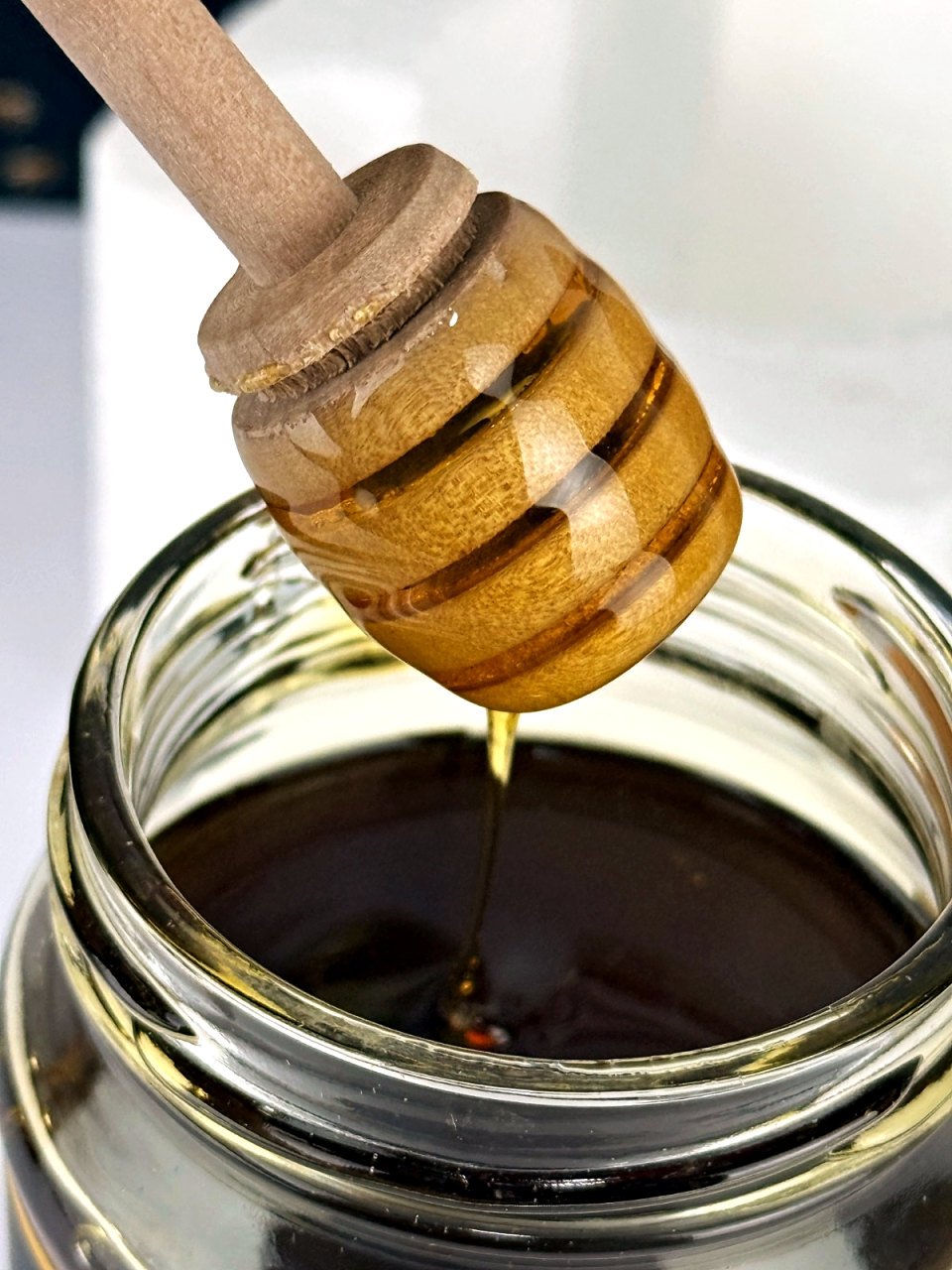
Spun, never boiled
Cold-centrifugal extraction keeps the natural pollen and enzymes in.
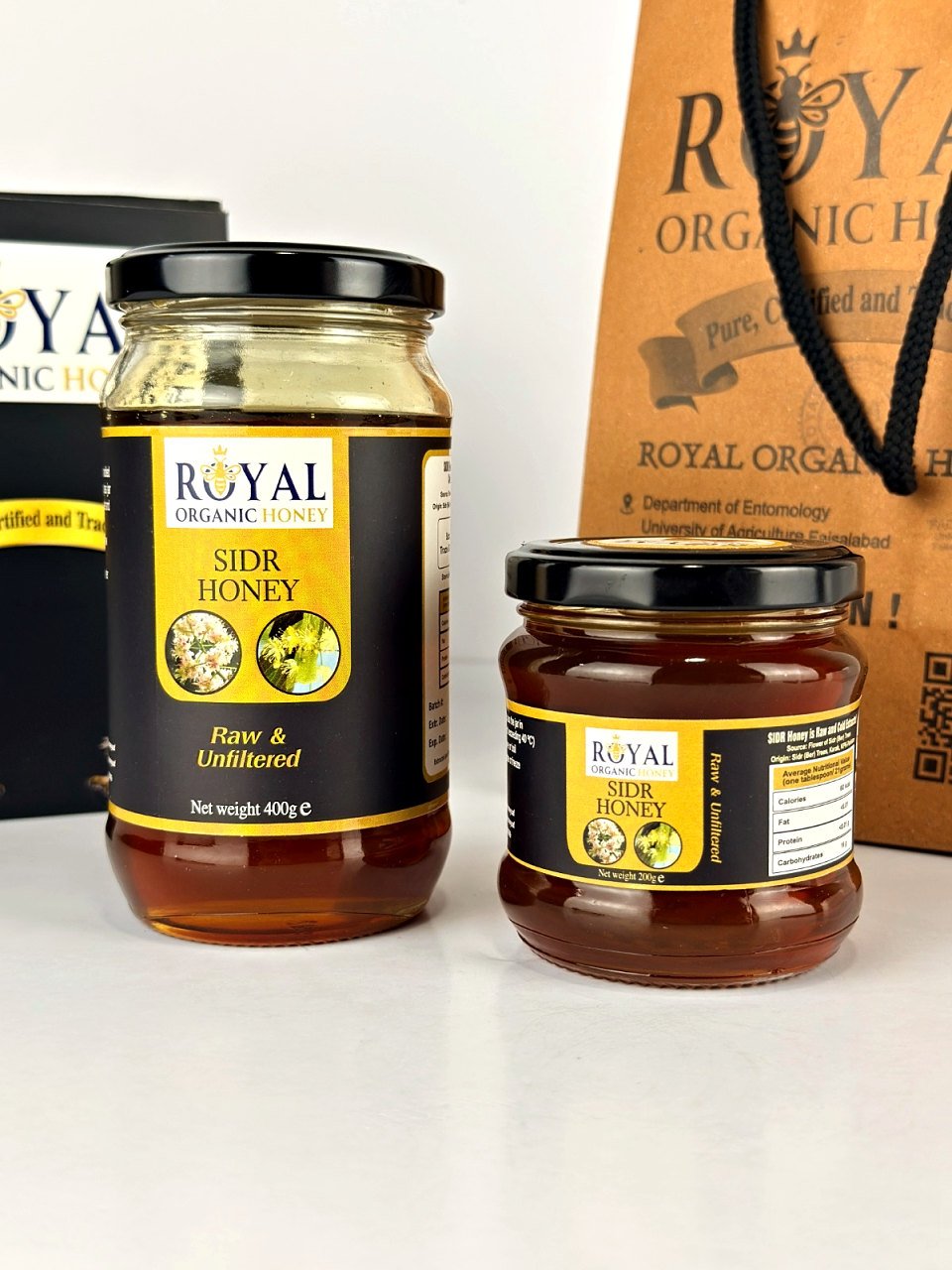
Packed only in glass
No plastic touches the honey, and the jar can be used again.
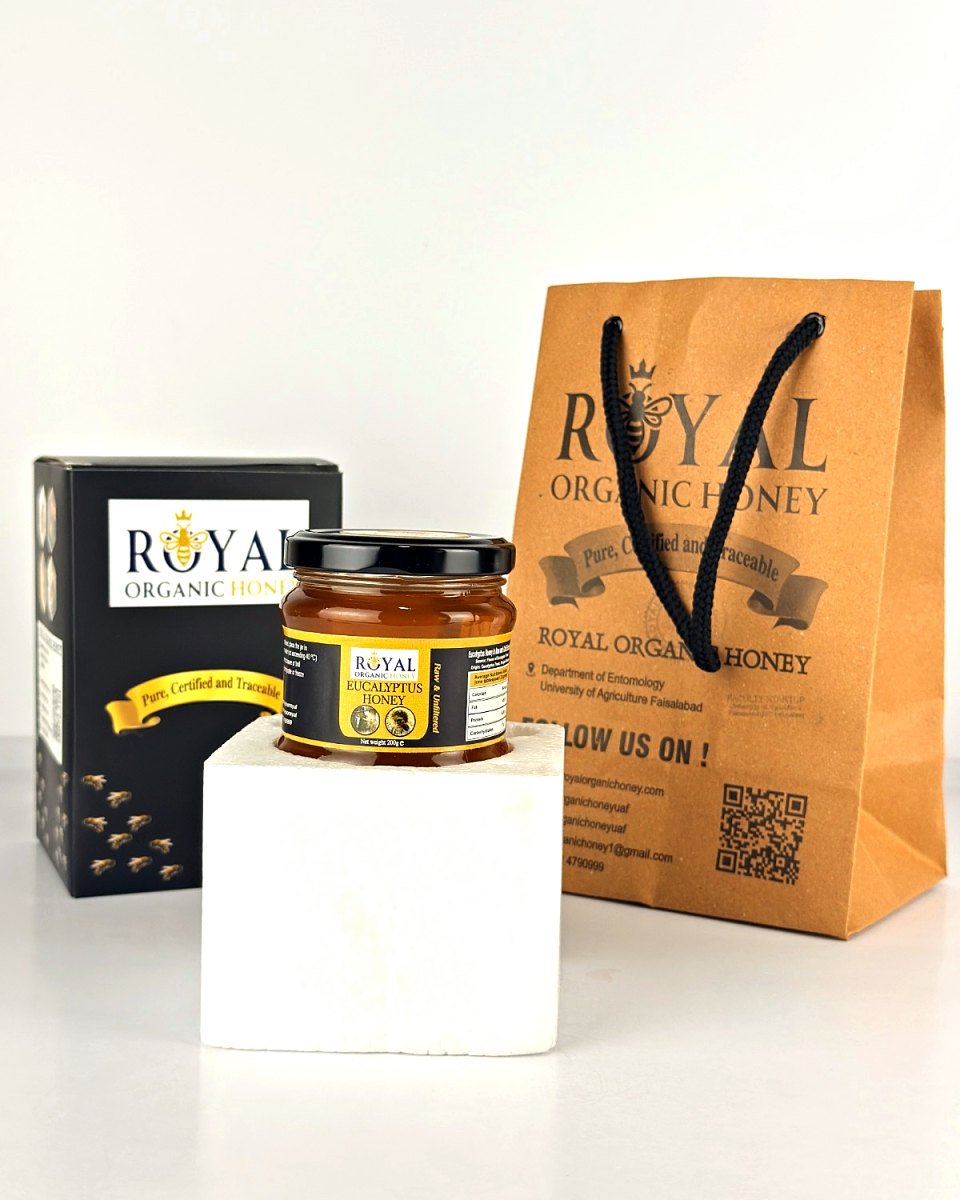
Packed to travel safely
Protective packing, and free delivery across Pakistan.
Why raw honey crystallises
Honey is a natural mix of sugars. In cool weather the glucose in raw honey slowly forms crystals, which is why our honey can turn thick or grainy in winter. Heated, ultra-filtered honey stays runny because the particles that start crystals have been removed.
Crystallised honey is just as good to eat. To make it runny again, stand the closed jar in warm water (not above 40°C). Never microwave or boil it, and do not keep it in the fridge.
Check your own jar
Scan the QR code on the back label to see the batch in your jar and its lab results.