
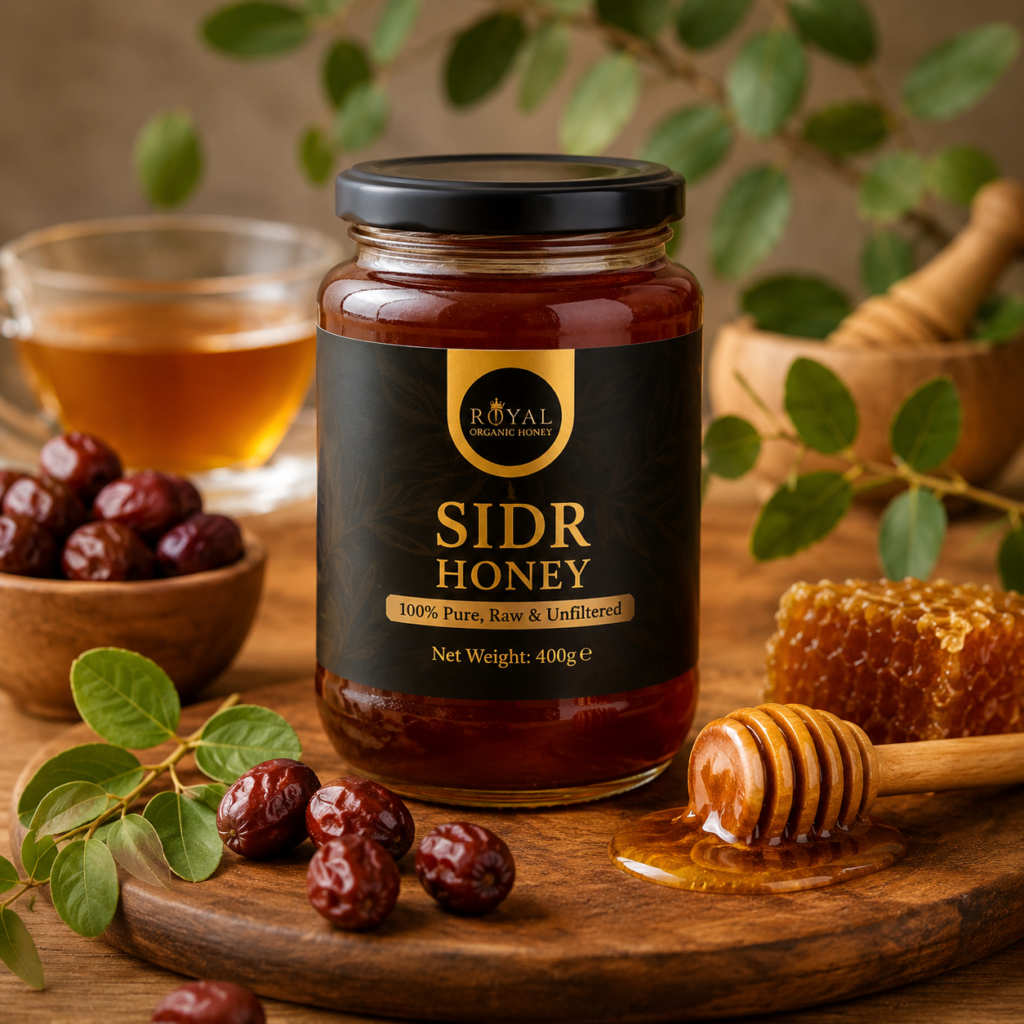
You want a honey that brings deep floral flavor and a touch of warmth to your honey baked ham, and sidr honey often delivers that without overpowering the meat. Use sidr honey for a rich, complex glaze that browns well and adds a layered sweetness to ham while also working in savory sauces and sides.
This post will explain what sidr honey is, how it compares to common varieties, how to pick authentic jars, and simple ways to use it in your ham glaze and other savory dishes. Expect practical tips on flavor balance, storage, nutrition, and cultural background so you can choose the best honey for your next meal.
You will learn where Sidr honey comes from, what makes it different from other honeys, and how it tastes. The points below focus on origin, special qualities, and flavor so you can evaluate authenticity and use.
Sidr honey comes from bees that feed mainly on the flowers of the Sidr tree (Ziziphus spp.). The most famous source is Yemen, especially Hadramawt, though Sidr trees also grow in Pakistan and parts of the Arabian Peninsula. Traditional beekeepers in these regions often harvest by hand and prize unadulterated, single-flower (monofloral) batches.
This honey has a long cultural and religious history in the Middle East. It appears in historical texts and is valued in folk medicine. Modern demand and limited harvest windows make genuine Sidr honey rare and often costly.
Sidr honey is typically thick and viscous, with a deep color that ranges from amber to dark brown. Its texture and density come from the concentrated nectar of the Sidr flower and minimal blending with other nectars.
You should expect stronger antimicrobial activity compared with common mixed-flower honeys, though exact properties vary by region and season. Authentic Sidr is often raw and unfiltered; look for third-party purity testing or traceable origin to avoid adulteration. Proper labeling and batch testing help confirm monofloral Sidr status.
Sidr honey has a pronounced, complex taste. Expect rich caramel and toffee notes, with occasional fruity or floral undertones depending on the local Sidr variety.
The finish tends to be long and slightly tangy rather than purely sweet. Because of its concentrated flavor and aroma, you can use small amounts to add depth to tea, marinades, or medicinal preparations without overpowering other ingredients.
Choose a honey that adds balanced sweetness, a touch of floral or caramel flavor, and good glazing properties. Think about flavor intensity, moisture content, and how the honey will caramelize under heat.
Look for pure, single-ingredient honey with no added syrups or corn products. Check the label for terms like pure honey or 100% honey and avoid ambiguous phrases such as “honey blend.”
Color and aroma matter: darker honey often brings richer, caramel-like notes that deepen the glaze, while lighter honey gives a milder, floral sweetness. Smell the jar if possible — a toasty or earthy scent signals depth.
Viscosity affects how the glaze coats the ham. Thicker honey clings better and caramelizes more evenly. If honey is too runny, reduce water or mix with a bit of brown sugar to improve stickiness.
Raw honey can add complex flavors but may vary batch to batch. If you need consistent results, choose pasteurized, high-quality honey from a trusted brand.
Different floral sources change honey flavor. Clover and wildflower honey tend to be mild and versatile, so they won’t overpower spices or mustard in your glaze. Manuka and sidr (sidr/jujube) honey have stronger, distinct profiles — sidr gives an earthy, date-like note that pairs well with savory ham.
If you want a pronounced caramelized crust, pick darker honeys like buckwheat or some wildflower varieties. For a subtler finish, choose light-colored varieties such as clover.
Consider matching the honey to your other glaze ingredients. Strong honeys need simpler glazes; mild honeys allow bolder additions like mustard, brown sugar, or citrus.
Buy honey from reputable producers or local beekeepers when possible. Local honey often indicates the dominant floral source and can provide fresher flavor than mass-produced jars. Ask the seller about harvest date and floral origin if you want predictable taste.
Look for third-party testing or certifications if purity matters to you. Labels like “raw” or “organic” can help but read ingredients to confirm no additives. For sidr honey, verify origin (Yemen or regional sources) to ensure authenticity.
Price often reflects rarity and processing. Pay more for specialty honeys when you want unique flavor notes; choose mid-range, single-flower honey for everyday glazing that delivers consistent, reliable results.
Sidr honey adds strong floral and slightly citrus notes that lift savory recipes. Use it as a finishing glaze, a component in sauces, or a sweet counterpoint in braises and breakfasts.
Use sidr honey to build a glossy, balanced glaze for roasted or spiral-cut hams. Mix 2–3 tablespoons sidr honey with Dijon mustard, a splash of orange juice, and a pinch of ground cloves for a tangy-sweet coating. Brush the glaze on in the last 20–30 minutes of roasting, reapplying every 5–10 minutes to form a shiny crust without burning.
For smaller cuts or vegetables, thin the honey with a little hot water or vinegar (1:1 honey to liquid) so it spreads evenly. Broil briefly at the end for caramelization, watching closely to avoid charring. Use residual glaze as a drizzle on plated dishes for extra flavor and shine.
Sidr honey pairs well with pork, poultry, and game because its floral depth contrasts rich, fatty flavors. For pork, combine honey with soy sauce, garlic, and ginger for an Asian-style glaze that balances sweet and umami. For chicken, mix sidr honey with mustard and lemon; roast or grill until the skin crisps and the honey caramelizes.
With richer meats like duck or lamb, use sidr honey sparingly in marinades or finishing sauces alongside acid (vinegar or citrus) and herbs like thyme or rosemary. Try a simple pan sauce: deglaze with stock, stir in 1–2 teaspoons sidr honey, finish with butter and chopped herbs for a glossy, balanced finish.
This section highlights specific nutrients, active compounds, and practical health contributions you can expect from honey, Sidr honey, and honey-glazed ham. It focuses on antioxidants, enzymes, protein, sodium, and how these affect daily eating choices.
Honey and Sidr honey contain phenolic compounds and flavonoids that act as antioxidants. These molecules help neutralize free radicals in cells. Sidr honey, from Ziziphus trees, often tests higher in total phenolics than many common floral honeys, which may give it stronger antioxidant capacity per teaspoon.
Raw honey also contains small amounts of enzymes such as glucose oxidase and diastase. Glucose oxidase produces hydrogen peroxide slowly, giving mild antimicrobial effects in wounds or the digestive tract. Heat-treated or heavily processed honey and factory-glazed hams lose many of these enzymes, so choose raw, minimally processed honey when you want enzyme activity.
Honey provides quick carbohydrates: about 20 grams of sugar per tablespoon. Use it for short-term energy or to sweeten foods without refined sugar. Sidr honey may offer a slightly richer mineral profile—trace iron, potassium, and calcium—though quantities are small and not a replacement for whole-food sources.
Honey-glazed ham delivers protein—typically around 15–20 grams per 3-ounce serving—but also often contains high sodium and added sugars from the glaze. If you manage blood pressure or sodium intake, watch portion size and choose lower-sodium or unglazed options. Pair ham with vegetables and whole grains to balance sodium and boost fiber, vitamins, and minerals.
Sidr honey stands out for its strong floral origin and prized purity. You’ll notice clear differences in flavor, texture, price, and how easy it is to find compared with common honeys like clover, acacia, or manuka.
Sidr honey often tastes richer and more complex than supermarket clover or orange blossom honey. Expect deep, caramel-like notes with a mild floral finish. Its flavor can be slightly tangy depending on the harvest year and region.
Texture is usually thick and viscous. Sidr can be more syrupy than light, runny varieties like acacia. It may crystallize slowly and form fine, smooth crystals when it does. That makes it good for glazing meats like a honey-baked ham or finishing cheese.
If you value a bold flavor that holds up in cooking, Sidr works well. For delicate teas or recipes needing a mild sweetener, lighter honeys may suit you better.
Sidr honey is often much pricier than common table honeys. You can expect a broad price range driven by origin and purity—some bottles cost several times more than clover or wildflower honey. Rare single-origin Sidr from Yemen or specific regions commands the highest prices.
Availability varies. Supermarket honeys are widely available year-round. True Sidr is seasonal and limited because bees must forage on sidr trees during specific bloom periods. That scarcity makes authentic Sidr harder to find locally; you may need specialty shops or reputable online sellers.
When buying, look for clear labeling of origin and testing or certification to reduce risk of counterfeits. Higher price often reflects rarity and testing, but always check seller reputation before you pay a premium.
Store cooked honey-baked ham in the refrigerator at or below 40°F (4°C). Wrap it tightly in plastic wrap or place it in a sealed container to keep air out and slow drying.
For short-term use, keep sliced or spiral-cut ham refrigerated for 3–5 days. Label the package with the date so you know when it needs to be used.
Freeze ham if you need to keep it longer. Wrap portions in foil and plastic, or use freezer bags; frozen ham stays good for about 1–2 months with best quality.
If you work with honey sidr or plain sidr honey, store honey in a cool, dark place at room temperature. Use a clean, dry spoon to avoid introducing moisture or contaminants.
Reheat only what you plan to serve. Reheat gently to preserve texture and glaze: low oven heat or a microwave on low power works well. Avoid repeated reheating.
Simple checklist:
Follow these steps to keep both your ham and honey safe and flavorful.
You will read how honey baked ham and Sidr honey appear in regional dishes and in holiday rituals. The focus is on specific uses, symbolic meanings, and how families and cooks pass these practices down.
You will find honey baked ham most often in American holiday and comfort-food menus. Chefs and home cooks glaze the ham with sweet syrups, brown sugar, or honey to create the shiny crust and balance the salt. Restaurants use spiral-sliced hams for easy serving at buffet-style meals and catered events.
Sidr honey plays a different role in Middle Eastern and Yemeni cooking. You can drizzle it on flatbreads, yogurt, and desserts for a floral, complex sweetness. Small amounts are used in savory marinades and dressings to add depth without overpowering spices. Local cooks prize Sidr for its distinct flavor, so you will often see it used sparingly to highlight traditional recipes.
You will encounter honey baked ham at Christmas, Easter, and large family gatherings across the United States. Hosts choose it for its size and presentation; a glazed, spiral-cut ham becomes the centerpiece of a holiday table. Caterers favor it for ease of carving and consistent flavor that appeals to many palates.
Sidr honey shows up in religious and cultural celebrations in Yemen and neighboring regions. Families present jars of Sidr as gifts during weddings or Eid, signaling health and prosperity. You will also see Sidr used in ceremonial remedies and served with tea during important visits, reinforcing hospitality and social bonds.
Look for clear sourcing information. You should see the country or region of origin, ideally Yemen or a known Sidr area, and a harvest season or beekeeper name when possible.
Check for lab testing and certificates. Ask the seller for a certificate of analysis or pollen report to confirm Sidr (Ziziphus) pollen and absence of common adulterants.
Use sensory checks to spot quality. Pure Sidr honey tends to be thick with a deep amber or dark caramel color and a rich, slightly tangy taste. Trust your senses but combine them with documentation.
Compare price against market norms. Authentic Yemeni Sidr is often expensive. If a jar is much cheaper than typical retail, treat that as a red flag for blending or fraud.
Prefer raw, unheated honey labels. Labels that say “raw” or “unfiltered” raise the chance the honey kept its natural enzymes and flavors. Still verify with other checks, since labels can be misleading.
Buy from reputable sellers and read reviews. Choose sellers with clear return policies, good reviews, and third-party testing shown on their product pages.
Beware of common red flags:
Keep a small tasting sample and document what you buy. That helps you compare jars over time and report problems if you suspect fraud.